
What's the difference between a timing belt and a timing chain?
Both keep the crankshaft and camshafts turning in time. A timing belt is a reinforced rubber belt that must be replaced at the interval set by the manufacturer. A timing chain is metal and is designed to last much longer, but chains, tensioners and guides can still wear and need replacing.
Signs of timing belt or chain trouble
- Your car is at or past its timing belt interval in the logbook
- Rattling from the front of the engine on cold start (common with worn chains)
- Ticking or slapping noises from the timing cover area
- Check engine light with camshaft or crankshaft correlation codes
- Engine misfires or won't start
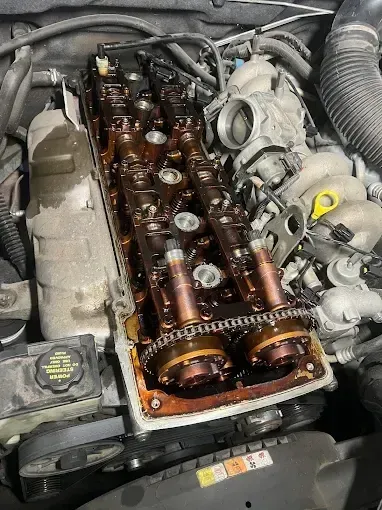
Why is timing belt replacement so important?
A timing belt gives little warning before it fails. Manufacturers set a replacement interval in kilometres and years — whichever comes first — because rubber ages even when a car isn’t driven much. Your logbook or owner’s manual lists the interval for your engine. If you don’t know when it was last done, we’d recommend treating it as due.
What does a timing belt replacement include?
Typically the belt, tensioner and idler pulleys are replaced, and often the water pump, depending on the engine design. The engine is set to its timing marks or locked with the correct tools, the new parts are fitted and tensioned to specification, and the engine is rotated by hand to confirm timing before it is started.
What about timing chains?
Timing chains run in oil and are designed to last much longer than belts. They can still wear, especially with infrequent oil changes. A worn chain often rattles on cold start and may set fault codes. Catching it early avoids the risk of the chain jumping a tooth or failing.
Questions worth asking your mechanic
Whoever works on your car, these questions help you understand the job and the quote:
- Does my engine have a belt or a chain?
- When is the belt due by kilometres and age?
- Will the water pump, tensioner and idlers be replaced at the same time?
- Is my engine an interference engine?
From our workshop
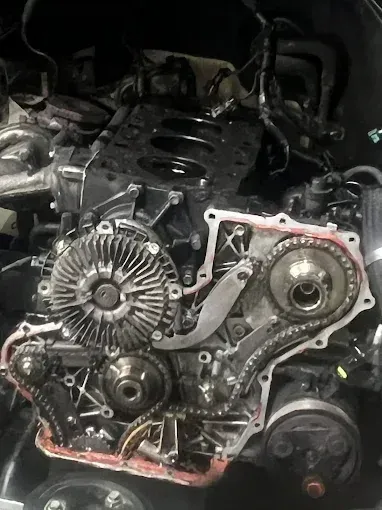
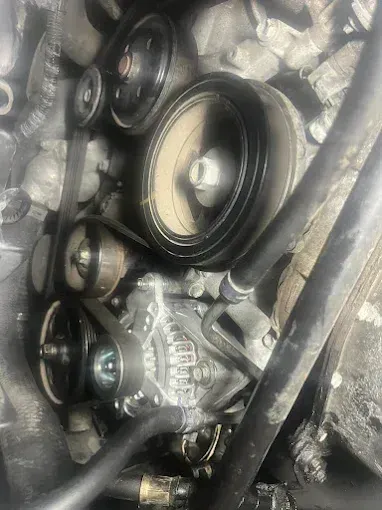
Recent jobs photographed at our Sunshine North workshop.
Frequently asked questions
What happens if a timing belt breaks?
The engine stops. On many engines, known as interference engines, the valves can then hit the pistons and cause serious internal damage. That's why the replacement interval matters.
Do timing chains need replacing?
There's usually no fixed interval, but chains can stretch and guides and tensioners can wear, especially if oil changes have been overdue. A rattle on start-up is a common early sign.
Why replace the water pump with the timing belt?
On many engines the water pump is driven by the timing belt or sits behind it. Replacing it at the same time avoids paying for the same labour twice if it fails later.